Sponsored links

Horizon Review

Alistair Noon: Alexander Pushkin’s ‘The Bronze Horseman’


Salt headlines


{ds1::title}

{ds1::pubDate}

{ds1::description} Read more …

Alistair Noon

Alistair Noon

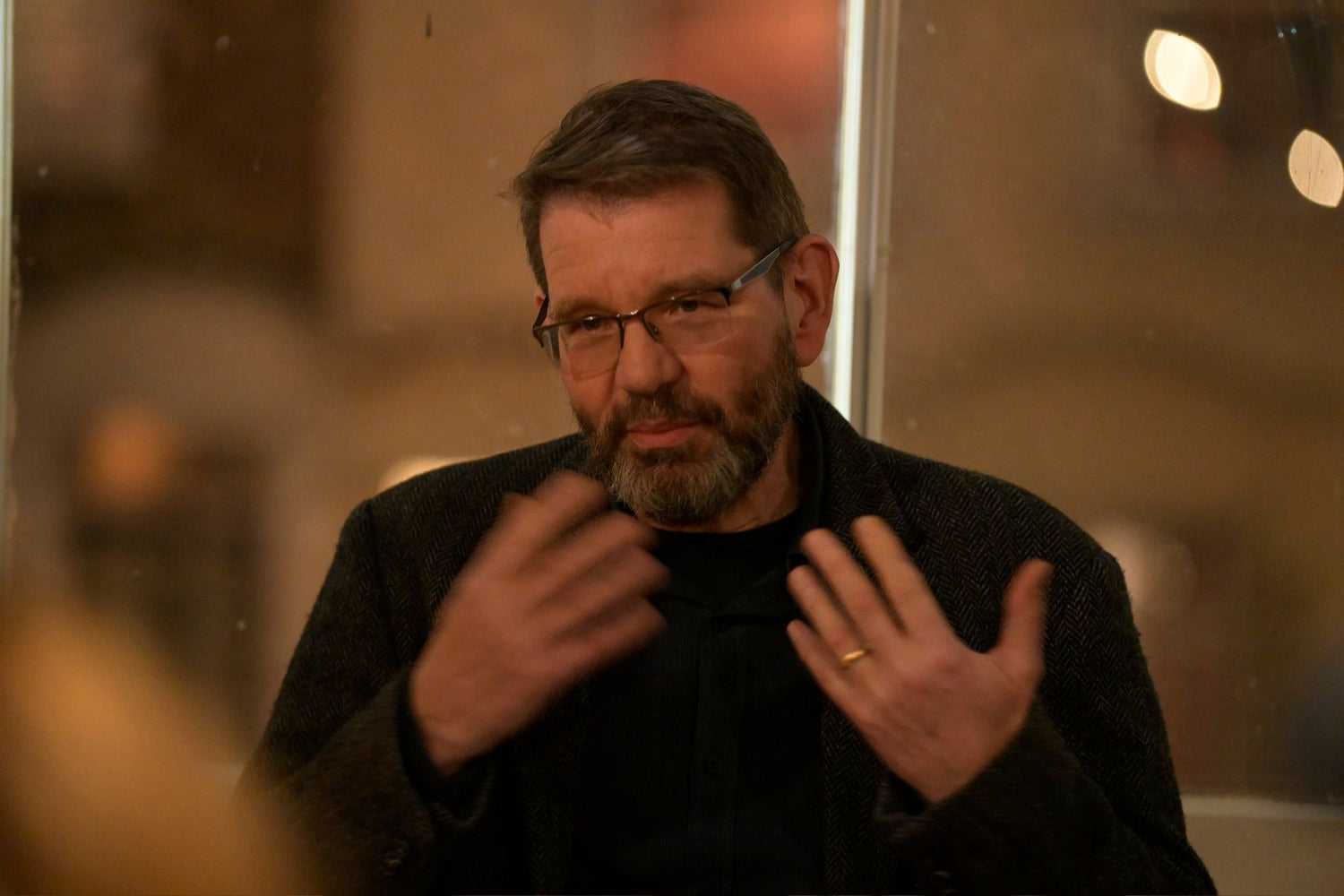
Alistair Noon is a member of the Anglophone minority in central Brandenburg, and was born in 1970. His first print chapbook At the Emptying of Dustbins was recently published by Oystercatcher Press. Across the Water was joint winner of the Mimesis Digital Chapbook Initiative 2008, and a further e-chapbook Swamp Area is online at Intercapillary Space. He recently edited a collection of essays on the work of Séan Rafferty, issued as an e-book on the centenary of Rafferty’s birth. Other reviews and essays have appeared at Jacket, Litter and Eyewear. His translations include (from German) August Stramm and Monika Rinck, and (from Chinese) Xiao Kaiyu. He is currently translating Mandelstam.

Author photo © Clare Jephcott

Dragged Along by a Statue: Translating Pushkin’s ‘The Bronze Horseman’

Walk along the hard, straight embankments of the Neva — or take a Google Earth trip down to the centre of St. Petersburg — and you’ll come to a large lump of granite, atop which a determined and martial-looking figure is pulling up a fierce, eye-bulging horse, and pointing out across the wide river in the direction of the West. Falconet’s statue of Peter the Great has become the Little Mermaid of St. Petersburg, only the Little Mermaid isn’t a symbol of geopolitical manoeuvring, emerging naval power and enforced socioeconomic change in a huge but predominantly agrarian territory. Peter’s founding of St. Petersburg in the early 18th century derived from a need to keep the regional rivals, the Swedes, at arm’s length, and construct a prestige project for his imperial ambitions.

The source material of Pushkin’s tale of how a young clerk loses his prospective fiancé in a brief but deadly flood includes newspaper reports of a flood that had taken place in St. Petersburg in 1824. Somewhere in the background is also Virgil’s Aeneid. Though the narrative is retrospective, its quasi-supernatural aspect — does the Horseman “really” come to life and pursue Yevgeny, or does it all take place in the latter’s traumatized mind? — seems not dissimilar in technique to that of a science fiction story set just a few years from now where most things are the same, but one thing is different.

The poem is also a virtuoso performance of form and tone, moving from ode to narrative, to chatty interior monologue, to jibes at contemporary poets, and enactments in verse of psychological distress and trauma. It’s a love poem for a city — this is the bit the censors didn’t mind — and a not-too-subtly concealed elegy for those who died in its construction — an aspect the censors certainly did mind: the poem did not appear in anything like its full form until after Pushkin’s death by duelling in 1837, and even then with certain omissions. Critics have disagreed about the nature of Pushkin’s attitude to Peter the Great: did he imply that Peter was to be admired? Hated? Distrusted? Accepted? At the very least, the poem problematizes the relationship of the state and the individual. It might, in Poundian terms, be accorded the status of an Image with a capital “I”.

If the translation is a success it won’t need an apology, but I’ll offer one here for any dissatisfied customers. Pushkin is an all-rounder, so I tried to make my compromises everywhere a little bit, rather than prioritize one particular aspect and make a huge compromise elsewhere. The rhythm of ‘The Bronze Horseman’ can be analyzed in metrical terms as iambic tetrameter, but Russian is a strongly stressed language, and the distribution of natural as opposed to metrical stresses in a tetrameter is frequently such as to give, to my ear anyway, the feel of a three-beat line. It was the three natural stresses, rather than the four metrical stresses that I was more concerned to preserve, at least as a rough base, though the reader will quickly see and hear that even here I’ve been very flexible. The imagery of the poem is sharp and concise, and I was loathe to add or delete words and images for the sake of line length. This, perhaps, is where I have indeed been guilty of favouritism towards one particular element.

Eliot’s ‘ghost of a metre’ (behind good free verse) has a parallel in rhyme I think, and my translation aims to give the feel of a rhyming poem without making the compromises in diction and meaning that tend to accompany attempts to do Pushkin in full-chime rhyme in English (Edwin Morgan’s ‘Autumn’ is one highly successful exception to this tendency.)

Alexander Pushkin: ‘The Bronze Horseman’

Prologue

On the banks of a wilderness of water
one man stood, brimming with thoughts
as his eyes advanced to the horizon.
The breadth of the river surged forward,
as a single, ramshackle canoe sped by.
Along the moss-ruled, swampy shores
he saw the dark and scattered huts
of the godforsaken Finns;
and the forest, foreign to the sun,
sounded around him.
                                  And he thought:
Here’s where we’ll threaten the Swedes from,
where we’ll set a city’s first stones
to spite our power-drunk neighbours.
We’ll make a slave of nature,
hack a window through to Europe
and by this sea put down firm feet.
All flags will find their way
across these waves; and we’ll hold a feast
out here in these wastes.

           One hundred years have passed,
and the youthful city’s become the marvel
of the midnight regions, has risen
from the dark forests, from the sweat
of the marsh, luxuriant and confident.
Where nature’s neglected stepson,
the Finnish angler, would sit by himself
on low riverbanks to cast a fraying net
into unplumbed depths, now
the stern hulks of palaces and towers
crowd shores busy with life,
and ships from all ends of the earth
jostle towards rich jetties;
the Neva is draped in granite,
bridges raised across its waters,
islands wearing the warmth
of green gardens; in the glow
of the younger capital
old Moscow seems ever fainter,
a purple-clad widow
standing before the new tsarina.

           Oh act of Peter, I’m in love
with your strict and structured form,
the Neva’s commanding flow,
its granite banks, the design
in the iron railings, the translucent
dusk and moonless sheen
of dream-soaked nights.
As I write in my room I need
no lamp. Bright giants are asleep
on the empty streets,
and the needle of the Admiralty shines,
and banning the gloom from gold skies,
dusk hurries on towards dawn,
and night makes do with a half-hour.
I’m in love with the frost and immobile air
of your brutal winter, the sprint
of skates along the broad river,
girls’ faces brighter than roses,
with ballrooms, their lights and noises;
and — when it’s time for the single
to get down to serious drinking —
the hiss of foaming glasses,
the rum-punch’s flame of blue.
I’m in love with the glittering force
of the drills on the Field of Mars,
the singular beauty of foot-soldier and horse,
the shreds of victorious banners
in the strict, rippling ranks,
with bronze as it flashes on caps
shot through in battle.
War capital, I’m in love
with the smoke and thunder
at the fort when the Tsarina of the North
bestows her son to the empire,
or Russia triumphs over enemies
once more, or when the Neva
cracks open its pale blue ice,
bundles it off to the Baltic,
and, sensing spring days, exults.

Stand in beauty, Peter’s city,
remain as unshakable as Russia.
May the defeated elements
make their peace with you. Let
the Finnish waves forget
their ancient enemy and prisoner,
their futile malice fail to unsettle
the everlasting dream of Peter.

           There was a time of terror,
its memory fresh … This, friends,
is the theme of the events
I’ll relate in my bleak story.

Part one

November breathed an autumn coldness
across Petrograd, as it lay under dark clouds.
The noisy waves were busy rippling
at the edges of graceful railings,
the Neva shifted like a sick man
in a restive bed. It was late
already and dark, as an angry rain
beat and beat against the windows;
and the wind, as it blew, seemed to whine.
Around this time, young Yevgeny
was walking back from friends’.
We’ll award our hero this first name.
Its sound is fine enough; what’s more,
my pen and it have met before.
His surname is of no concern:
though once, it may have had its turn
at pealing through famous stories
beneath the quill of Karamzin,
the world and the talk of the town
have quite forgotten it. Our hero’s home
is in Kolomna, you’ll find his name
on a payroll somewhere,
he keeps away from nobles,
and no longer grieves for friends passed on
or for things now buried and gone.

          On getting home, Yevgeny
shook off his coat, and undressed for bed,
but lay awake for hours as every kind
of speculation swirled through his mind.
His thoughts? That he wasn’t well off
and would have to earn his independence
and recognition by hard slog; that God
was more than welcome to dole
him out more capital and brains.
That many contented souls
whose intellectual aims
weren’t high — the lazy sods! —
were on holiday all year round!
Two years now he’d been at his job …
That the weather had not calmed down,
the river was still rising; that for tonight
the Neva bridges had been raised,
cutting him off from his future bride
for two to three full days.
Breathing in deeply, Yevgeny floated
off into a dream, as if a poet:

          “Get married? Me? Why not?
Of course it won’t be easy.
But hell, I’m young and fit,
and ready to work round the clock;
one way or another I’ll fix us
a quiet and simple place to live
to put Parasha’s mind at rest.
And when a year or two has passed,
they’ll boot me up to some higher post.
Parasha will be in charge
of the house, of feeding the kids … Our lives
will really get going, and holding hands
we’ll walk ahead, our grandchildren
will see us to our gravesÉ”

          … Yevgeny’s dream. But his spirits
that night were down, and he wished
that the howl of the wind were less dismal,
that the rain wouldn’t rattle at the window
with such fury …
          His drowsy eyes at last
fell shut. Now the foul night-mist
was thinning out. A pallid day had come …
a day of terror.
          All night the Neva had torn
towards the sea to face a storm,
but failed to get the better
of the wind’s violent temper,
so the weary river broke off battle.
By morning, all along its banks,
people were clustering to admire the spray,
the swells, the foam of the frenzied waves.
But the Neva, filled with new life
by the force of the winds from the gulf,
turned back in scorn, seething,
its waters spilt over the islands, the weather
upped in ferocity, the Neva
roared as it breathed in deeply,
like a cauldron it gurgled and steamed,
then like a beast whose rage was at its peak
it suddenly flung itself across the city.
Everyone ran, everywhere emptied,
water gushed into cellars,
canals rushed up to railings;
like a Triton, Petropolis surfaced,
with water dragging at its waist.

          A siege! An assault! Malicious waves
crawl through windows like thieves.
Sterns take running leaps
at glass. Hawkers’ trays,
their shroud-like covers soaked through,
wreckage of huts, beams and rooves,
the trading stock of the thrifty,
beggars’ paltry property,
bridges the storm abducted,
coffins washed from the cemetery
now bob through the streets!
          God’s anger is there to see:
the populace awaits its punishment. All’s gone.
Roof and food are lost.
Where are we to find them?
                                        At that dangerous time
another tsar, who’s since passed on,
still ruled in splendour.
With worry and sorrow in his eyes,
he stepped out onto his balcony
and spoke: “No tsar can master
God’s elements”. Grief
seemed to wash across his face
as he mulled over the disaster
and its malevolence.
Squares resembled lakes,
streets fed into them like broad rivers.
The Palace was a desolate island.
The Tsar spoke — and across the city
generals set off along dangerous routes
that took them through violent waters
along every street, however distant,
to save a population gripped
by fear, drowning in their houses.

          Back then, on Peter’s Square,
a new construction towered
in one corner. There,
above an elevated porch,
as if alive, with raised paws,
two lions kept watch.
On one of those beasts of marble
Yevgeny was sitting, stiff and pale,
his hat now lost,
his arms clenched into a cross.
A pitiful figure, filled with fear
but not for himself. He didn’t hear
how the thirsty waves rose
and lapped at his soles,
how the rain lashed his face,
how the wind, with a violent yelp,
had suddenly ripped his cap
from his head. His despairing gaze
was fixed on a distant place.
Resembling hills, the waves swelled
bad-temperedly out of the rebellious
depths; here a storm wailed,
there the flotsam skimmed past …
Christ, no! So close
to the waves, right on that cove,
that unpainted fence, that willow,
and the shanty hut where the widow
and her daughter, his life’s whole meaning —
Parasha … Or was he just dreaming?
Was this what life was, in its essentials?
A desolate dream, heaven’s
joke at the earth’s expense?

          As if in a trance,
as if manacles hold him to the marble,
our hero can’t get down! Water
surrounds him, nothing more!
And high up and unshakeable,
with its back towards him,
above the mutinous Neva, stands,
with an outstretched hand,
that graven image on its bronze horse.

Part two

          But glutted with destruction,
as if it now needed a break
from disorderly conduct,
the Neva began to flow back,
feasting its eyes on its mutiny,
casually flinging about its booty.
It was like some thug with his vicious
gang, who’ve torn into a village
and rip, shatter and smash,
looting and yelling, and urge
each other on to violence with curses,
surrounded by panic and wailing,
their plunder weighing them down,
and afraid of the chase,
the exhausted robbers hasten
homewards, dropping their takings
en route.

          The water fell, and a street
emerged. Yevgeny, our hero,
sped to the river as it subsided;
fear, longing and hope
were vices clamped round his mind.
But the malevolent waves, filled
with the pride of victory, boiled
again, as if a fire smouldered
beneath them, and foam
crested the waves once more,
and the Neva panted like a horse
galloping up from combat.
Yevgeny’s eyes located a boat;
he ran up to it as if to some trinket
glittering on a road.
He called the ferryman.
Untroubled by a single thing,
the ferryman was ready to row him
across the heartstopping waves
for a handful of kopecks.

          That seasoned oarsman
battled and battled with the storm,
and at any moment the canoe
might have sunk between the ranks
of the waves with its foolhardy crew,
until at last it reached the far bank.
          Frantic, Yevgeny runs
towards familiar places,
along familiar streets. He gazes
round, but nothing is as he knows it.
A panorama to flinch at.
Torn and hurled, piled-up things,
twisted or collapsing homes
shifted by the waves, and scattered
corpses as if this were a battlefield.
Weak from fear, his memories gone,
Yevgeny runs headlong
to where the future’s been keeping
its news for him inside a sealed letter.
And he’s reached those huts already,
there’s the creek, not far now to the house …
But what’s this … ?
                                 He stopped,
turned round, walked back to one spot.
Looked … stepped forward … and gazed
once more. OK, their hut
must be right here. The gates,
I guess, got taken by the flood.
But where are the walls,
the doors? Like an evening sky,
anxiety darkens his mind, and he walks
around and around in circles,
thinking everything through, out loud,
until suddenly he strikes
his forehead with his hand,
and breaks into giggles.
          Night-time darkness
dropped onto the city that was still trembling.
That night it was long before anyone slept,
as people talked and tried to find sense
in that day’s events.
                             Out of the pale,
exhausted rainclouds, the morning’s rays
dazzled across the calm capital,
but they discovered no trace
of yesterday’s disaster, whose malice
was concealed again in purple.
Life reverted to good order,
the streets were passable, and people
walked along them unconcerned.
Civil servants left their roosts
for the office. Unperturbed,
go-ahead small businessmen
were opening up the basements
that the Neva had burgled,
compensating their losses
from neighbouring properties.
Boats were cleared from yards.
                              And Count Khvostov,
poet and favourite of the heavens sang
of the grief on the Neva’s banks
in those verses we all still love.

          But Yevgeny, Yevgeny …
His trampled mind could not withstand
these shockwaves. The mutinous
noise of the Neva and of the winds
travelled through his ears, and fear would fill
his thoughts as he wandered, mute.
Some kind of vision, it seemed,
was stretching him on a rack.
A week, a month passed by and still
he never once went home. The lease
expired on his vacant bolthole,
the landlord let it to a poor poet,
and Yevgeny failed to come back
for such things as he had. Before long
the world had lost all meaning to him. He’d wander
the streets all day, then sleep on wharves,
live from bread proffered through a window.
His threadbare clothes were ripped and rotting.
Fierce children chased him with stones.
He felt the lash of coachmen’s spit
whenever he blocked the road,
ignoring approaching horses, deafened
by the sound of unease in his mind.
He dragged out his miserable life,
neither animal nor human, neither
one thing nor the other — alive
on earth, or dead among ghosts …
           Once he was asleep on the quays
by the Neva, as summer days
declined into autumn. The wind wheezed
with rain, and a sombre wave
grumbled as it splashed onto the wharf,
beating the sleek steps
like a man at the doors of a court
shut against his complaint.
Our victim of events awoke.
Everything around him was murky.
Rain dripped, the dismal wind
wailed. Far into the night-mist
the watchmen were hailing round …
Yevgeny gave a jump:
the flood in its whole horror
was alive again in his memory. Hurry
called him to his feet, and off he tramped
along the streets, then suddenly stopped.
Gingerly, he trailed
his eyes around him, a wild
fear in his face. Where was he?
He sensed beside him the pillars
of an enormous building.
With paws raised, up on the roof,
life-like lions stood watch,
and up in front of him in the gloom
on top of the railed-off rock,
that graven image with its outstretched hand
sat astride its horse of bronze.

           Yevgeny flinched. His thoughts
took on disturbing forms.
He saw once more the place
where the flood had played,
where the predatory waves
had massed in their angry rebellion,
and the square, and the lions,
and the man whose head of bronze
loomed from the fog, immovable,
whose lethal willpower founded
this city at the sea’s brink.
How terrible he looked in the mist!
The brooding visible on his brow!
Concealed within him, what power!
And within that horse, what fire!
Where is your galloping taking you, proud horse,
where will your hooves fall?
Great shaper of lives,
declare: you came to the abrupt
edge, pulled back the iron bridle,
and Russia reared up.

Yevgeny, out of his senses,
kept circling the statue’s base,
kept casting savage glances
at the face of the master
of half the globe. He felt his chest
constrict. He rested his forehead
against the cool bars,
his eyes twitching in the mist,
a flame ran across his heart,
his blood began to seethe.
He stood there angrily, in full view
of the proud statue, teeth clenched,
fingers tightened, as if seized
by a dark strength.
“All right, builder of things incredible!”
he whispered, fury making him tremble,
“I’ll get you!” And he set off
at a run, headlong.
And it seemed as if in a split-second
the face of that terrible emperor
flared into fury, and quietly turned
towards him … And Yevgeny runs
across the empty square,
and behind him he can hear,
like a drum-roll of thunder,
heavy, resounding hooves
along a quaking road. Behind him,
in the dawnlight of the pale moon,
one hand thrust into the sky,
the Bronze Horseman rides
on his noisily cantering warhorse.
In Yevgeny’s desperate, night-long trauma,
wherever his legs transport him,
the Bronze Horseman pursues him
with the clatter of his galloping hooves.

           From then on, whenever he crossed
that square, agitation was painted
in his face. He’d hurriedly press
one hand to his heart, to restrain
somehow his distress,
doffed his threadbare cap,
didn’t raise his nervous eyes,
skirted round to the opposite side.

           Not far off shore
there’s a small island where, out late
with his nets, a fisherman sometimes moors
to boil up his meagre meal,
or some official takes
his Sunday boat ride
out to this desolate island,
where not a single blade
of grass has grown, the place
to where that surge, as it played,
brought the wreckage of a hut.
It came to rest there, like a black shrub.
Last autumn they carried it away
on a barge. It was empty and ruined.
And where there’d once been a door,
they found my insane friend,
and gave his cold corpse
right there its beggar’s funeral.


   © 2008 Salt Publishing Limited   CLMP   IPG   ACE